
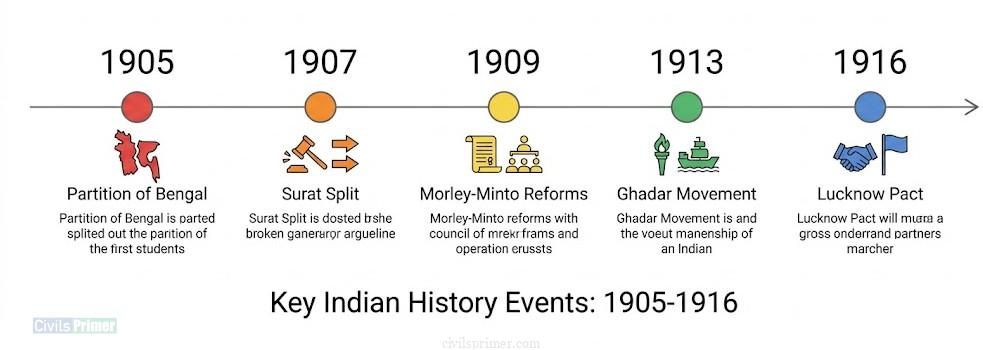
The Roar of the Tiger: India’s Turn Toward Militant Nationalism (1905–1918) #
By the turn of the 20th century, a new generation was coming of age in India. They were tired of the “mendicancy” (begging) politics of the Moderates. They didn’t want to petition the British; they wanted to demand their rights. Into this volatile atmosphere stepped a Viceroy who would unwittingly become the architect of Indian extremism: Lord Curzon.
Part I: The Curzonian Shock and the Partition of Bengal #
Lord Curzon, an imperialist to the core, viewed Indians with disdain. He believed Congress was “tottering to its fall” and wished to assist in its “peaceful demise”. His policies were reactionary—he reduced the number of elected Indians in the Calcutta Corporation (1899) and tightened control over universities (1904) to curb nationalism.
But his stroke of genius (or madness) came in 1905. Bengal was the nerve center of Indian nationalism. Curzon decided to split it. The official reason? Administrative efficiency—Bengal was too big (78 million people) to be governed effectively. The real motive? “Divide and Rule.” The plan was to split the Bengali-speaking population, making them a minority in their own province, and to create a Muslim-majority province in the East to turn them against the Congress.
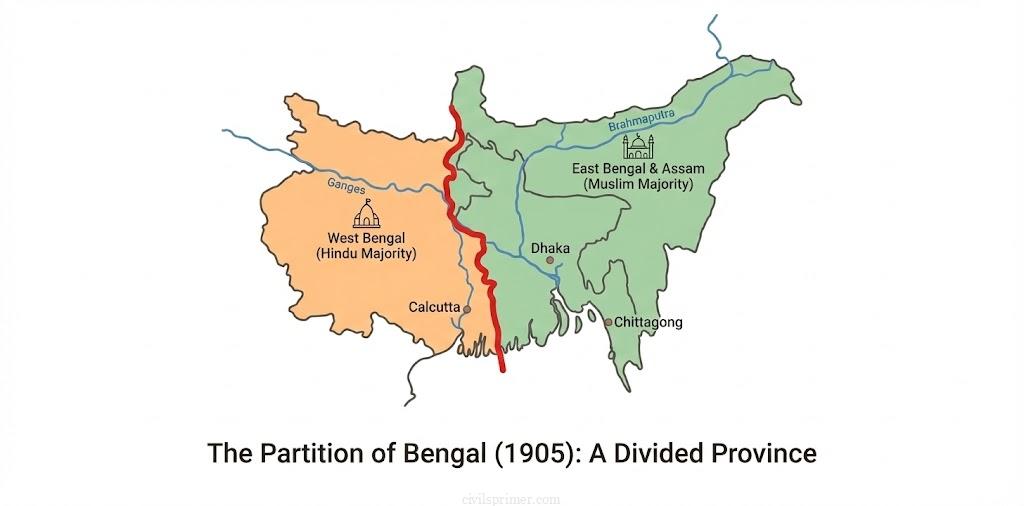
On October 16, 1905, the partition came into effect. The reaction was not what the British expected. It wasn’t despair; it was fury. It was the “Day of Mourning.” People fasted, bathed in the Ganga, and walked barefoot singing Bande Mataram. Rabindranath Tagore called for Raksha Bandhan, where Hindus and Muslims tied rakhis on each other’s wrists to symbolise unbreakable unity.
Part II: The Swadeshi Movement – “Atmasakti” #
The anti-partition agitation transformed into the Swadeshi Movement—the first truly mass movement in India. The Moderates (Surendranath Banerjea, K.K. Mitra) initiated it with petitions, but the Extremists (Lal-Bal-Pal and Aurobindo Ghosh) soon took over. Their message was simple: Boycott British goods and embrace Swadeshi (indigenous goods).
- Bonfires of foreign cloth lit up the streets.
- Washermen refused to wash foreign clothes.
- Priests refused to officiate marriages using foreign items.
This era saw the rise of “Atmasakti” (Self-Reliance).
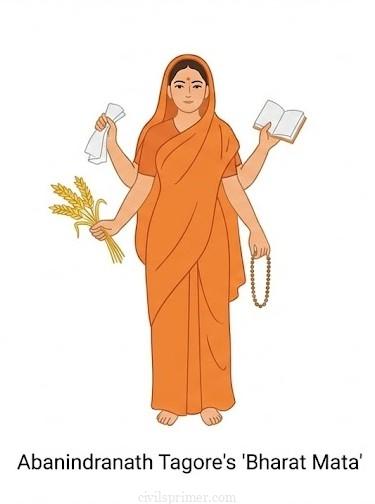
Culture: Abanindranath Tagore painted “Bharat Mata,” breaking away from Victorian naturalism.
Education: The National Council of Education was set up (1906). The Bengal National College was founded with Aurobindo Ghosh as principal.
Industry: P.C. Ray set up the Bengal Chemicals Factory. V.O. Chidambaram Pillai, in a bold move, set up the Swadeshi Steam Navigation Company in Madras to challenge the British monopoly.
The Movement’s Limits: While students and women participated in large numbers for the first time, the movement failed to mobilize the Muslim peasantry in East Bengal effectively. The British successfully played the communal card, and the All India Muslim League was formed in 1906 to protect “special Muslim interests,” often opposing the Congress.
Act III: The Surat Split (1907) – A House Divided #
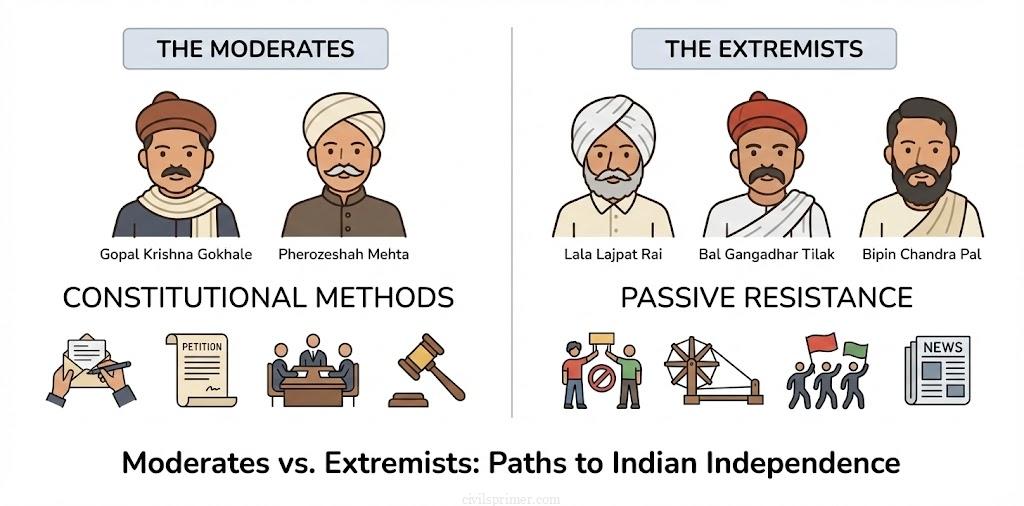
Tension brewed within the Congress. The Extremists (led by Tilak, Bipin Chandra Pal, Lala Lajpat Rai) wanted to extend the Swadeshi Movement to the rest of India and demand “Swaraj” (Self-rule). The Moderates (led by Gokhale and Pherozeshah Mehta) wanted to confine it to Bengal and feared suppressing British repression.
At the Calcutta Session (1906), a split was avoided by bringing the respected Dadabhai Naoroji as President. He declared “Swaraj” as the goal, satisfying the Extremists temporarily.
But in 1907, at the Surat Session, chaos erupted. Shoes were thrown, and the Congress split. The Moderates took control of the party, while the Extremists were expelled. This “Surat Split” was a national tragedy. It left the Congress paralyzed and the Extremists leaderless as the British launched a massive crackdown. Tilak was sent to Mandalay jail for six years (1908).
Act IV: The Revolutionary Phase (The Bomb and the Pistol) #
With the mass movement crushed and leaders jailed, the youth felt frustrated. They turned from mass politics to individual heroism—Revolutionary Terrorism. Their motto: “Force must be stopped by force”.
- In Bengal: The Anushilan Samiti and Jugantar group took the lead. In 1908, Khudiram Bose and Prafulla Chaki threw a bomb at a carriage in Muzaffarpur, intending to kill the unpopular judge Kingsford, but killed two British ladies instead. Khudiram was hanged; Prafulla shot himself. Aurobindo Ghosh was arrested in the Alipore Conspiracy Case but acquitted later.
- In Maharashtra: The Abhinav Bharat society, founded by V.D. Savarkar, was active. In 1909, A.M.T. Jackson, the Collector of Nasik, was assassinated.
- In Punjab: Revolutionary fire was kept alive by Ajit Singh (Bhagat Singh’s uncle). In 1912, Rashbehari Bose and Sachin Sanyal daringly threw a bomb at Viceroy Hardinge in Delhi, but he survived.
Act V: The Ghadar Movement (Rebellion Abroad) #
The fire spread overseas. In 1913, the Ghadar Party was established in San Francisco by Lala Hardayal and Sohan Singh Bhakna. It was a secular movement of Punjabi soldiers and peasants who wanted to incite a revolt in India.
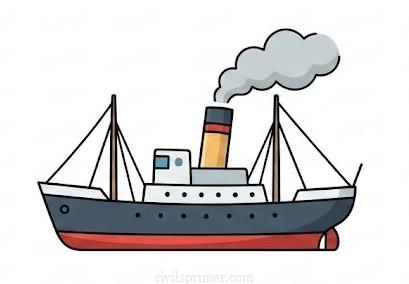
The Komagata Maru Incident (1914) fuelled their anger. A ship carrying 376 Indian passengers was turned away from Canada due to discriminatory laws. When it returned to India (Budge Budge, Calcutta), the British police fired on the passengers, killing 18. This enraged the Ghadarites, who attempted an armed rebellion in Punjab in 1915, but it was crushed by the British.
Act VI: The Home Rule Leagues (1916) #
By 1915, Tilak was back from jail. The “First World War” had started, and India was supporting Britain. But the nationalists realised that loyalty would not yield freedom. Two Home Rule Leagues were launched in 1916:
1. Tilak’s League: Covered Maharashtra (excluding Bombay), Karnataka, Central Provinces, and Berar. His slogan, “Swaraj is my birthright and I shall have it,” electrified the masses.
2. Annie Besant’s League: Covered the rest of India. She was an Irish Theosophist who brought great organizational skills to the movement.
They demanded self-government within the British Empire (Dominion Status), similar to Australia or Canada. They shifted the emphasis from the “educated elite” to the “masses”.
The Climax: The Lucknow Pact (1916) #
The year 1916 marked a turning point at the Lucknow Session of the Congress.
1. Reunion: The Moderates and Extremists reunited after 9 years. Tilak and Besant played a key role.
2. Congress-League Pact: For the first time, the Congress and the Muslim League came together to demand self-government. Congress accepted the controversial “Separate Electorates” for Muslims to ensure their support. This Lucknow Pact paved the way for the mass movements that Gandhi would soon lead.
By 1918, the stage was set. The Moderates had failed, the Extremists had awakened the nation, and the Revolutionaries had shown immense courage. India was now waiting for a leader who could combine these energies into a single force. Entry of Mahatma Gandhi.
UPSC Mains Subjective Previous Years Questions #
- 2020 → Evaluate the policies of Lord Curzon and their long-term implications on the national movements.
- 2017 → Why did the ‘Moderates’ fail to carry conviction with the nation about their proclaimed ideology and political goals by the end of the nineteenth century?
- 2016 → Explain how the Uprising of 1857 constitutes an important watershed in the evolution of British policies towards colonial India. (Contextual relevance to the shift in British policy leading to 1905).
Answer Writing Minors #
Introduction (For Mains Answers)
The period between 1905 and 1918 marked a decisive shift in the Indian freedom struggle from the “mendicancy” of constitutional agitation to the assertiveness of militant nationalism. Triggered by the Partition of Bengal and the failure of Moderate politics, this era witnessed the rise of mass mobilization through Swadeshi, the growth of revolutionary activism, and the structural consolidation of nationalist forces through the Home Rule Movement and the Lucknow Pact.
Conclusion (For Mains Answers)
Although the Swadeshi and Home Rule movements could not secure immediate self-rule, they successfully broadened the social base of the freedom struggle to include students, women, and the lower middle class. By establishing the demand for ‘Swaraj’ and fostering a spirit of self-reliance (Atmasakti), this phase laid the indispensable ideological and organizational groundwork for the mass-based Gandhian movements that followed.
Related Latest Current Affairs #
- August 2025: Tributes to Sri Aurobindo (Revolutionary Phase) On his birth anniversary, tributes were paid to Sri Aurobindo, a key figure in the Revolutionary Activities (Phase I). He was a member of the Anushilan Samiti and was arrested in the Alipore Bomb Case (1908). He was the first leader to demand complete independence before evolving into a spiritual reformist.
- August 2025: Tributes to Lokmanya Bal Gangadhar Tilak The death anniversary of Bal Gangadhar Tilak, the “Father of Indian Unrest,” was observed. He led the Extremist faction (Lal-Bal-Pal) causing the Surat Split (1907), championed the Swadeshi Movement, and later launched the Home Rule League Movement (1916) with Annie Besant to demand self-rule.
- August 2025: Recognition of Bengali Women Revolutionaries An editorial highlighted the role of women in the freedom struggle, including Begum Rokeya Sakhawat Hossain, who wrote Sultana’s Dream in 1905, envisioning a feminist utopia. This period also saw the rise of female participation in the revolutionary activities of Bengal.